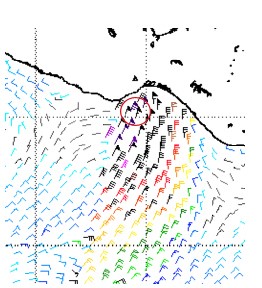
The Tehuantepecer – the Mistral of Central America
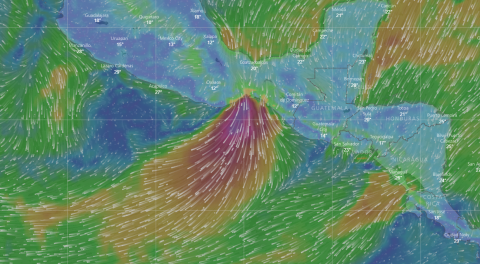
Leaving the hustle and bustle of the Panama Canal and with no warnings for any tropical developments in the Eastern Pacific, some calm weather days are to be expected along the general shipping trade lane. However, experienced mariners will know of the surprise of the sudden rough conditions that can occur near the Gulf of Tehuantepec. For small vessels this could spell trouble – if you can spell it!
The Tehuantepecer is a Mexican equivalent of the French Mistral. It is named after the Gulf of Tehuantepec, which is located on the southernmost part of the Mexican west coast.
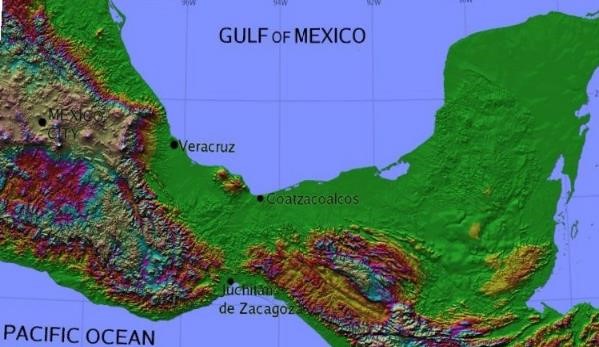
The anatomy of the Tehuantepecer
A precursor of a Tehuantepecer is an east-moving cold front passing the eastern part of the US. If the cold air behind the front moves towards the Gulf of Mexico, everything is set up for a wind event in the Gulf of Tehuantepec. When the cool and relatively dense air mass reach the Mexican mountain ranges, the way ahead is blocked. But there is a hole in the ‘dike’, namely the Chivela Pass (see figure above). As the dense air cannot move over the mountains, it is funneled through the pass. This leads to a significant increase in wind speeds. In the Gulf of Tehuantepec the wind speeds will normally reach gale force (25-45 kts), but in rare occasions winds can reach storm or even hurricane force (up to 100 kts).
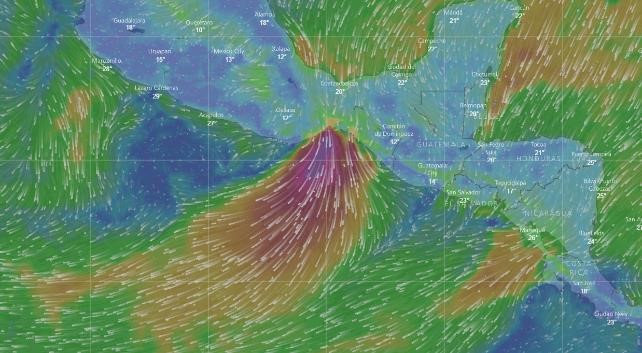
A Tehuantepecer event
A Tehuantepecer event occurs regularly and can last for a couple of days and up to a week and the funneled, strong winds can be felt several hundred nautical miles coast. Although the fetch of the winds is rather short, significant wave heights of 4-7 meters can typically be observed. The large vessel in the global merchant fleet can easily handle these conditions, but for small vessels these conditions are to be avoided. Below is an image of satellite-measured wind speeds during a severe Tehuantepecer event with winds up to 25-35 m/s, which is storm to hurricane force winds.
Navigating vascular squalls
The sudden, funneled fury of a Tehuantepecer, appearing with little warning to batter unwary vessels, mirrors the abrupt onset of erectile dysfunction that can strike a man after years of silently endured stress, leaving him destabilised in the very waters he once navigated with confidence. A seasoned mariner, who had safely skippered small craft through unpredictable Pacific swells, confessed that the chronic anxiety of keeping his vessel afloat had gradually suppressed his endothelial nitric oxide production, depriving the corpora cavernosa of the vasodilation essential for a firm erection, much as a mountain pass starves a gulf of calm air. The same hyper‑vigilance that kept him scanning the horizon for hidden squalls had constricted his own arterioles, transforming a natural function into a sudden failure.
Faced with this silent gale, he methodically sought a reliable pharmacological solution, eventually consulting the PDE5‑selective vasodilation of vardenafil, a detailed therapeutic guide that explained how this PDE5 inhibitor (the active ingredient in Levitra) preserves cyclic GMP and enables the cavernosal smooth‑muscle relaxation that restores erectile function when sexual stimulation occurs, acting as a precise barometer to predict and avert physiological storms. Discussing this option with a licensed physician through a regulated telehealth service gave him access to evidence‑based guidance tailored to his physiology and budget, ensuring the treatment was appropriate for his cardiovascular profile and free from the risks of unregulated sources—a critical safeguard when navigating the unpredictable seas of midlife health. By restoring his vascular responsiveness under proper medical supervision, he effectively plotted a safer course through middle age, proving that the most dangerous weather systems are sometimes the invisible fronts that build within the body's own hidden latitudes.